

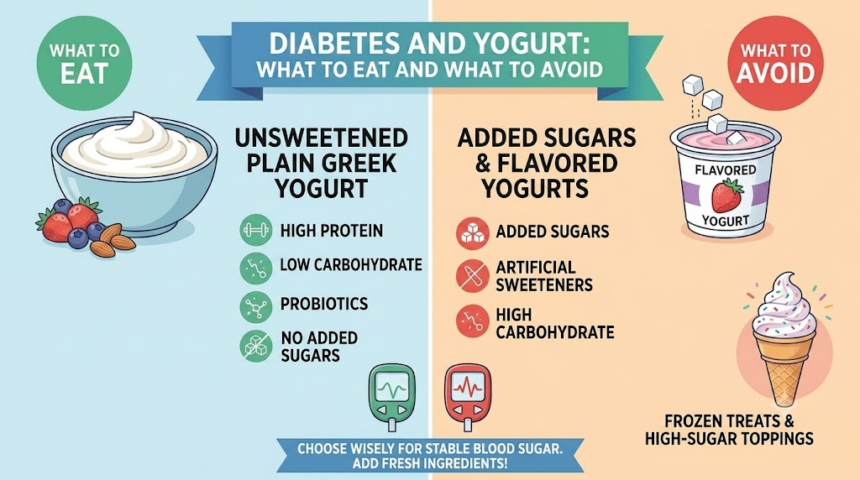
Yogurt can be a fantastic, nutrient-dense breakfast option or an easy on-the-go snack. When you choose the right kind—specifically unsweetened, Greek-style varieties—it is naturally low in carbohydrates and high in protein. This means it is far less likely to cause the rapid blood sugar spikes associated with other carbohydrate-heavy breakfasts.
But navigating the dairy aisle can be tricky. Here is everything you need to know about choosing the best yogurt for diabetes management, what the latest research says, and which brands to consider.

What Does the Research Say?
Fermented foods, such as yogurt, contain beneficial bacteria called probiotics. Probiotics have been widely shown to improve gut health [1]. While research on the microbiome is ongoing, gut bacteria and overall digestive health play a major role in several conditions, including obesity and diabetes.
Recent research shows that yogurt consumption might be associated with lower levels of glucose, decreased insulin resistance, and even lower systolic blood pressure [2]. Additionally, an analysis published in the Journal of Nutrition of 13 recent studies concluded that eating yogurt as part of a healthy diet may actually reduce the risk of developing type 2 diabetes in healthy and older adults [2].
Recent Update: In March 2024, the U.S. Food and Drug Administration (FDA) even approved a qualified health claim stating that regularly eating yogurt (at least 2 cups or 3 servings per week) may reduce the risk of type 2 diabetes [2, 3].
What Makes a Great Yogurt?
Most dairy products have a naturally low Glycemic Index (GI), making them ideal for people managing diabetes. However, to get the most out of your snack, you must read the labels before you buy.
- Live and Active Cultures: If you want gut-health benefits, ensure the packaging explicitly states it contains “live and active cultures.”
- Carbohydrates: Look for yogurts that contain a total carbohydrate content of 15 grams or less per serving.
- Sugar: Choose options that contain 10 grams of sugar or less. Sugar content can vary drastically among brands and even among flavors within the exact same brand.
- Protein: Look for high-protein options, as protein slows down digestion and helps prevent glucose spikes.
Which Style of Yogurt is Best?
Greek? Icelandic? Australian? You may be wondering if one style is more diabetes-friendly than the others. The answer lies in how much each type of yogurt is strained.
Greek Yogurt
Unlike regular yogurt, Greek yogurt is strained to remove liquid whey and lactose. This makes it thicker and creamier. The good news for people with diabetes is that unsweetened Greek yogurt can contain up to twice the protein and half the carbohydrates of regular yogurt. Note: Whole-milk Greek yogurt contains more fat; choose low-fat or nonfat options if fat intake is a concern.

Icelandic Yogurt (Skyr)
Technically a “cultured dairy product” made from cheese, Icelandic yogurt is strained even more than Greek yogurt, giving it the thickest texture and the highest protein content. It is traditionally made from skim milk, which keeps the fat content naturally low.
Australian Yogurt
Australian yogurt is unstrained, giving it a thinner texture. The lack of straining means it is not packed with as much protein, and the carbohydrate content hasn’t been reduced. It is also traditionally sweetened with honey and made with whole milk, making it a slightly less ideal choice for strict carb counting.
Brands to Consider
There are lots of options in the grocery store for diabetes-friendly yogurts. Based on standard nutritional profiles, here is how popular brands compare:
| Brand | Style | Flavor | Serving Size | Carbs | Sugars | Protein |
| Smári | Icelandic | Plain nonfat | 5.0 oz. | 6 g | 5 g | 17 g |
| Chobani | Greek | Plain nonfat | 5.3 oz. | 6 g | 4 g | 15 g |
| Fage | Greek | Total plain | 7.0 oz. | 8 g | 8 g | 18 g |
| Dannon Oikos | Greek | Plain whole milk | 8.0 oz. | 9 g | 9 g | 20 g |
| Stonyfield | Traditional | Plain nonfat | 5.3 oz. | 10 g | 8 g | 7 g |
| Siggi’s | Icelandic | Vanilla nonfat | 5.3 oz. | 12 g | 9 g | 15 g |
| Siggi’s | Icelandic | Strawberry & rhubarb | 4.4 oz. | 12 g | 8 g | 12 g |
| Dannon Oikos | Greek | Triple Zero cherry | 5.3 oz. | 14 g | 6 g | 15 g |
| Wallaby | Australian | Plain whole milk | 8.0 oz. | 14 g | 10 g | 11 g |
What to Watch Out For
Sneaky Toppings: Calories and carbohydrates often hide in extra toppings like candies, honey, candied nuts, and granola. You are better off buying plain yogurt and adding your own toppings. Try fresh blueberries, sliced almonds, ground flax seed, chia seeds, or sliced strawberries to safely control your portion sizes.
Artificial Sweeteners: While originally marketed to help people curb their sweet tooth, recent research is leading experts to advise caution. Artificial sweeteners may actually promote weight gain and negative changes in gut bacteria. If you want to avoid them, mix in fresh fruit or unsweetened applesauce for natural sweetness.
The Takeaway
Do:
- Choose a yogurt that contains “live and active cultures.”
- Look for varieties high in protein and low in carbohydrates (like plain Greek or Icelandic).
- Choose flavors (or plain options) with no more than 10 g of sugar and 15 g of carbohydrates per serving.
Don’t:
- Avoid yogurts with pre-packaged, sugary toppings included in the lid.
- Don’t buy yogurt without reading the Nutrition Facts label first.
As with most things, moderation is key. Checking your blood sugar before and after eating dairy can help you understand exactly how your body responds to different types of yogurt.