
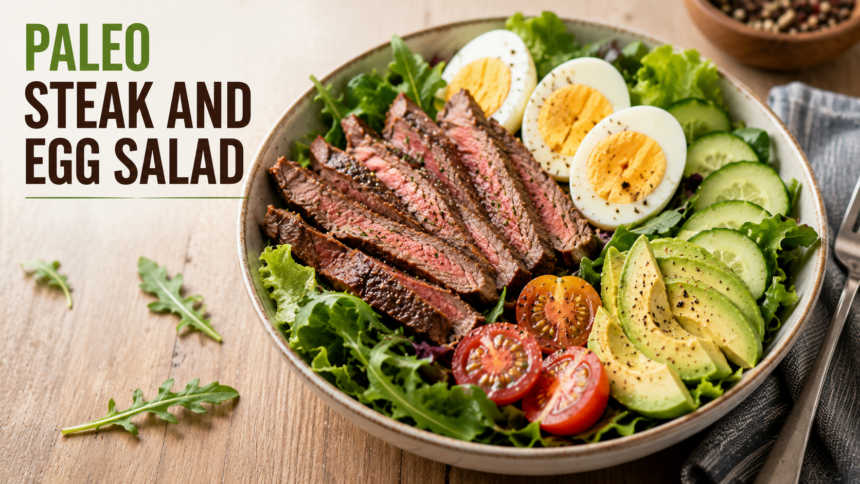
Robust, incredibly filling, and packed with bioavailable nutrients, this paleo-compliant take on a traditional Egg Salad elevates a simple lunchtime staple into a powerhouse meal. By utilizing lean, grass-fed steak alongside pasture-raised eggs, you provide your body with an exceptional source of high-quality protein and essential amino acids, which perfectly supports the foundational principles of a balanced paleo diet. Instead of relying on heavy, dairy-based dressings or processed mayonnaise, this salad uses a clean, olive oil and mustard vinaigrette, offering a brilliant dose of healthy fats that aligns seamlessly with expert insights on heart-healthy eating patterns.
Origin Paleo Steak and Egg Salad
The concept of pairing sliced beef with mixed greens has long been a staple in French bistros and American steakhouses, often served alongside rich cheeses and croutons. This modern, health-conscious adaptation strips away the refined carbohydrates and dairy, honoring the ancestral roots of hunter-gatherer nutritional philosophies by focusing exclusively on whole, unprocessed foods. It transforms a standard steakhouse dish into an optimized, functional meal, highlighting the incredible nutritional density of whole eggs and leafy greens without any inflammatory additives.
Why I Love This Recipe
I love that this meal feels incredibly indulgent and hearty, yet it won’t leave you feeling sluggish or weighed down on a busy afternoon. It is the perfect strategy for utilizing leftover steak from the night before, and it serves as an excellent cornerstone for smart, low-carb meal prep routines. You can boil the eggs and mix the dressing days in advance, allowing you to throw this gourmet, restaurant-quality bowl together in a matter of minutes.
Also Read : 10 High Protein Diabetic Breakfast Recipes
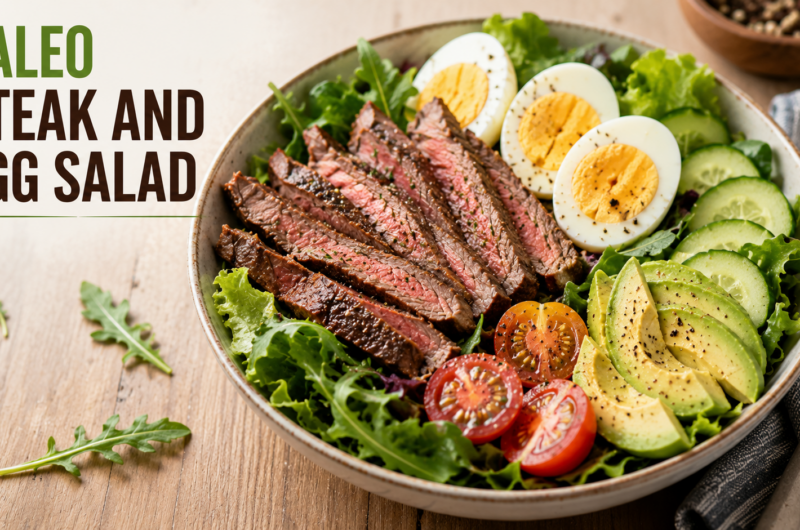
Paleo Steak and Egg Salad
Course: SaladCuisine: AmericanDifficulty: Easy2
servings10
minutes10
minutes480
kcalIngredients
For the Salad:
8 oz cooked grass-fed steak (flank, sirloin, or ribeye), thinly sliced
4 large pasture-raised eggs, hard-boiled or soft-boiled
4 cups mixed organic salad greens (spinach, arugula, and baby kale)
1/2 cup cherry tomatoes, halved
1/4 cup red onion, thinly sliced
1/2 avocado, sliced
For the Paleo Vinaigrette:
3 tbsp extra-virgin olive oil
1 tbsp apple cider vinegar
1 tsp Dijon mustard (ensure it has no added sugar)
1 clove garlic, minced
1/4 tsp kosher salt
1/4 tsp freshly ground black pepper
Directions
- Prepare the Eggs: If you haven’t already, boil the eggs to your preferred doneness (about 7 minutes for slightly jammy centers, or 9-10 minutes for hard-boiled). Transfer them immediately to an ice bath to cool, then peel and slice them in half.
- Make the Dressing: In a small glass jar or bowl, combine the extra-virgin olive oil, apple cider vinegar, Dijon mustard, minced garlic, kosher salt, and black pepper. Whisk vigorously (or shake the sealed jar) until the dressing is completely emulsified and smooth.
- Assemble the Base: Divide the mixed organic greens evenly between two large, shallow serving bowls.
- Add the Toppings: Arrange the thinly sliced steak, halved cherry tomatoes, sliced red onion, and avocado slices neatly over the bed of greens in each bowl.
- Add the Eggs: Place the sliced boiled eggs gently on top of the salad components.
- Dress and Serve: Drizzle the paleo vinaigrette generously over both salads right before serving. Toss lightly if desired, and enjoy immediately!
Notes
- Steak Temperature: This salad is fantastic with both warm, freshly seared steak or cold leftover steak straight from the fridge. If reheating leftovers, do so very gently in a skillet over low heat to prevent the meat from becoming tough and chewy.
- Mustard Check: To keep this recipe strictly Paleo and Whole30 compliant, always check the label on your Dijon mustard to ensure there is no white wine or added sugar in the ingredients list.
- Avocado Timing: Only slice your avocado right before you plan to eat the salad. If you are meal-prepping this for later in the week, leave the avocado out until the very last second to prevent it from turning brown and mushy.