
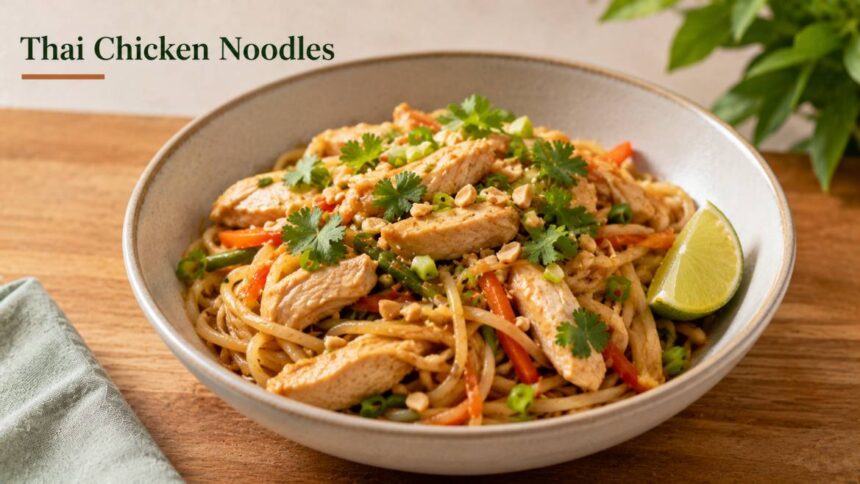
These incredibly vibrant, fiercely savory, and beautifully textured Thai Chicken Noodles are the ultimate weeknight dinnertime savior for anyone looking to bring the complex, sweet-and-sour flavors of a bustling Bangkok street food stall right into their own kitchen. Whether you are craving takeout after a long day or simply searching for healthy chicken dinner recipes to effortlessly elevate your standard poultry rotation, this quick-tossed wok marvel hits all the right marks. Packed with tender strips of chicken, chewy rice noodles, and a sharp, tangy tamarind and lime sauce, it delivers massive, restaurant-quality flavor while remaining exceptionally budget-friendly and remarkably easy to assemble in under 30 minutes.
Origin Thai Chicken Noodles
The tradition of stir-frying rice noodles over extreme heat is a cornerstone of Thai culinary culture, deeply influenced by the historical introduction of noodles by Chinese merchants centuries ago. Dishes like the world-renowned Pad Thai or the deeply savory Pad See Ew were perfected in the mid-20th century, heavily promoted by the Thai government to establish a unified national identity and provide a cheap, highly nutritious meal to the working class. By mastering the delicate balance of the four foundational Thai flavors—salty (fish sauce), sweet (palm sugar), sour (tamarind/lime), and spicy (chili)—modern home cooks capture the exact same health benefits of lean poultry and rice noodles, transforming simple pantry ingredients into a highly functional, deeply nourishing family staple.
Why I Love This Recipe
I love how this recipe transforms basic, inexpensive rice noodles and leftover chicken into a genuinely crave-worthy, highly textural centerpiece with surprisingly little active prep. It completely eliminates the sluggish, heavy feeling that often accompanies thick, oil-laden takeout boxes, relying instead on fresh aromatics and a clean, acidic sauce to brighten every single bite. It is one of the absolute best quick and easy healthy dinner ideas because the wok does all the heavy lifting in a matter of minutes. You can serve your Thai Chicken Noodles classically topped with crushed peanuts and bean sprouts, toss in a handful of broccoli for extra greens, or swap the chicken for firm tofu to make it entirely plant-based.
Tips for the Perfect Stir-Fry
To achieve beautifully chewy, distinct noodles rather than a gummy, broken paste, managing your noodle preparation and wok heat is absolutely critical. First, you must soak your dried rice noodles in warm (not boiling) water until they are just pliable, rather than boiling them on the stove. This is an essential expert stir-frying technique; boiling them before they hit the wok will instantly cause them to disintegrate when tossed with the sauce. Furthermore, you must ensure your skillet or wok is smoking hot before adding the chicken or the noodles, guaranteeing that signature wok hei (breath of the wok) that makes authentic Thai Chicken Noodles so irresistibly smoky and caramelized.
Also Read : One-pot Moussaka beef rice pilaf
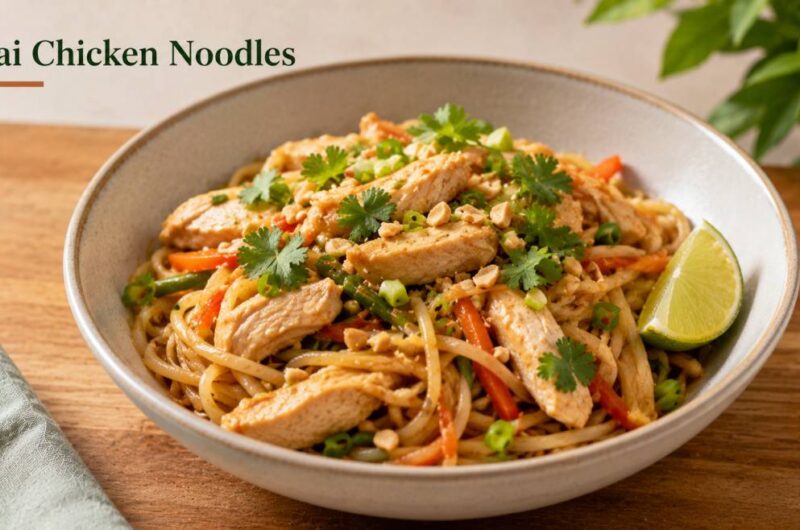
Thai Chicken Noodles
Course: DinnerCuisine: ThaiDifficulty: Medium4
servings15
minutes18
minutes356
kcalIngredients
For the Sauce:
3 tbsp fish sauce
3 tbsp brown sugar or palm sugar
2 tbsp tamarind paste (or fresh lime juice if unavailable)
1 tbsp low-sodium soy sauce
1 tbsp rice vinegar
1 tsp sriracha or red chili flakes (adjust for heat)
For the Stir-Fry:
8 oz dried wide rice noodles (Pad Thai or Pad See Ew style)
2 tbsp peanut oil or vegetable oil
1 lb boneless, skinless chicken breasts (or thighs), thinly sliced
3 cloves garlic, finely minced
2 large eggs, lightly beaten
1 ½ cups fresh bean sprouts
½ cup spring onions (scallions), cut into 1-inch pieces
For Garnish:
⅓ cup roasted peanuts, roughly chopped
Fresh cilantro leaves
Extra lime wedges
Directions
- Prep the Noodles (Crucial Step): Place the dried rice noodles in a large bowl and cover them completely with warm (not boiling) tap water. Let them soak for 15 to 20 minutes until they are opaque and pliable but still slightly firm to the bite. Drain thoroughly.
- Whisk the Sauce: In a small bowl, aggressively whisk together the fish sauce, brown sugar, tamarind paste, soy sauce, rice vinegar, and sriracha until the sugar is completely dissolved.
- Sear the Chicken: Heat 1 tablespoon of the oil in a large wok or a very wide skillet over high heat until it begins to smoke. Add the sliced chicken in a single layer. Let it sear undisturbed for 2 minutes to develop a crust, then toss and cook for another 3 minutes until fully cooked. Remove the chicken to a plate.
- Scramble the Eggs: Reduce the heat slightly to medium-high. Add the remaining 1 tablespoon of oil to the empty wok, followed by the minced garlic. Stir for 10 seconds. Push the garlic to one side of the pan and pour the beaten eggs onto the empty side. Scramble them quickly into soft curds.
- Toss and Caramelize: Return the cooked chicken to the wok along with the drained rice noodles. Pour the prepared sauce directly over the noodles. Using tongs, toss everything vigorously for 2 to 3 minutes until the noodles have absorbed the liquid, softened completely, and started to caramelize slightly on the edges.
- The Flavor Finish: Turn off the heat. Immediately toss in the fresh bean sprouts and the chopped spring onions, allowing the residual heat to wilt them just slightly so they retain their crunch.
- Serve: Plate your steaming Thai Chicken Noodles immediately. Garnish generously with the chopped roasted peanuts, fresh cilantro, and a big squeeze of fresh lime juice right before eating!
Notes
- Tamarind Substitute: Authentic Thai flavor relies heavily on tamarind paste. If you absolutely cannot find it, substitute it with equal parts fresh lime juice and a tiny splash of white vinegar, though the flavor will lack that signature fruity depth.
- Adding Vegetables: If you want to stretch this meal further, add 1 cup of thinly sliced bell peppers or shredded carrots to the wok right after searing the chicken.
- Storage: Store leftovers in an airtight container in the refrigerator for up to 3 days. Reheat gently in a skillet with a tiny splash of water or oil to prevent the noodles from sticking together.